by Iluobe Igho, Business & Infrastructure Analyst
Introduction
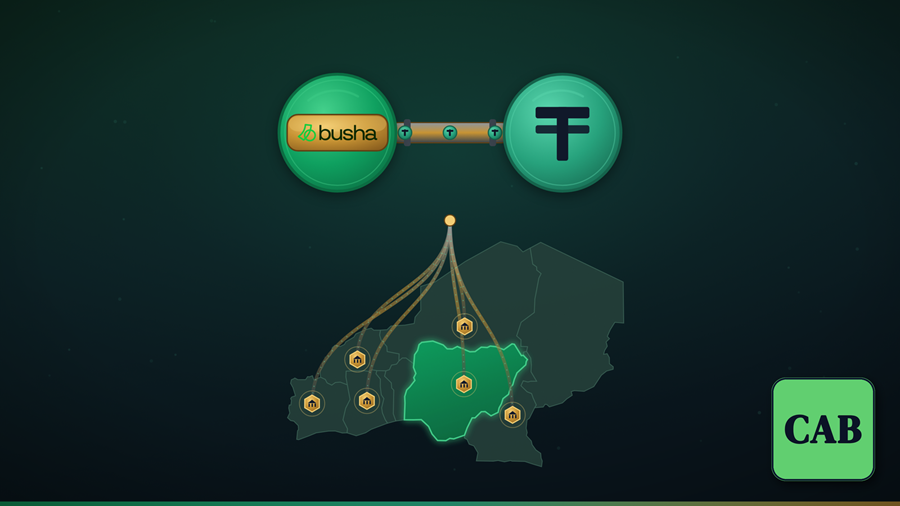
Recently, Busha Business, the enterprise B2B infrastructure arm of SEC-approved digital asset platform Busha, announced a strategic collaboration with Tether, the issuer of USD₮.
Announced in July 2026, the partnership expands access to licensed stablecoin liquidity, instant cross-border settlement, developer APIs, and yield-generating corporate treasury products for enterprises operating in Nigeria and Kenya.
Reportedly, Busha Business currently powers over 1,500 enterprises across East and West Africa. In Kenya alone. Of this number, Busha states that more than 250 businesses utilize the infrastructure to process millions of Kenyan Shillings (KES) in daily commercial transactions, supplier payouts, and international treasury transfers. Below is how that architecture looks like:
| Architecture Layer | Core Function / Capabilities | Primary Target / Output |
| 1. Global Liquidity Layer | Tether Global Liquidity (USD₮) | Provides deep, globally connected dollar stablecoin liquidity. |
| 2. Infrastructure & Compliance Layer | Busha Business Platform
(Nigeria SEC Approval-in-Principle& Regional Regulatory License)
|
Regulatory compliance, transaction routing, treasury management, and API access. |
| 3. End-User Layer | Enterprise Clientele |
|
Core Value Proposition & Operational Mechanics
The Busha-Tether integration targets three systemic pain points in Sub-Saharan African commerce: FX illiquidity, delayed correspondent banking cycles, and local currency depreciation.
Key Product Pillars
- Cross-Border FX & Supplier Settlement: Importers and corporates replace multi-day SWIFT cycles with near-instant USD₮ liquidity, settling international invoice obligations directly without correspondent bank delays.
- Corporate Treasury & Yield Management: Through partnerships with licensed asset managers, Busha Business enables companies to hold idle balances in USD-pegged assets or earn competitive daily yields on USD and Naira reserves.
- Busha Pay & Merchant APIs: E-commerce merchants, developers, and fintechs can integrate white-label payment APIs to collect international USD payments globally, with automated local currency conversion or dollar-denominated settlement.
“Businesses need financial infrastructure that moves at the speed of modern commerce. Through our collaboration with Tether, we are giving businesses access to globally connected liquidity on licensed infrastructure…” — Moyo Sodipo, Co-Founder & COO, Busha
Industry Context: The African Stablecoin Infrastructure Playbook
This partnership illustrates a broader structural evolution across Africa’s digital asset economy: the shift from retail speculation to B2B embedded financial infrastructure.
Between 2020 and 2024, African crypto adoption was primarily driven by peer-to-peer (P2P) retail trading. By 2026, driven by regulatory frameworks (such as South Africa’s FSCA financial-product licensing regime, Nigeria’s SEC VASP rules and Kenya’s VASP Regulations), the market has significantly consolidated around licensed/approved enterprise rails.
The Four Pillars of the B2B Stablecoin Playbook
- Regulatory Licensing as a Competitive Edge: Unlicensed P2P rails face increasing enforcement risks. Having an explicit SEC or central bank license is now mandatory to attract corporate balance sheets.
- Replacing SWIFT for Intra-African and China-Africa Trade: High correspondent banking fees (6%–10%) and long clearing delays make stablecoin-backed rails the primary settlement alternative for commercial importers.
- Inflation & Currency Hedging: Holding local currency cash reserves (NGN, KES, GHS) exposes businesses to sharp devaluation risks; dollar-denominated stablecoin treasury vaults act as a primary balance-sheet protection tool.
- API-First Embedded Distribution: Rather than building consumer brand awareness from scratch, stablecoin providers distribute liquidity by embedding their APIs inside existing fintechs, payment gateways, and banking apps.
Not surprising, from Yellow Card to even Luno recently, the B2B stablecoin playbook is noteworthy.
African Digital Asset Market Evolution
| Dimension | 2020–2024: The Retail Era | 2025–2026+: The Enterprise Era |
| Primary Market Driver | Retail P2P & Speculative Trading | B2B Cross-Border Supplier Payouts |
| Regulatory & Licensing | Unlicensed Off-Ramps & Regulatory Hostility | SEC / CBK / CMA Licensed VASP Rails |
| Core Product Focus | Consumer Mobile Wallet Trading | Corporate Treasury Yield & USD₮ Liquidity |
| Integration Model | Standalone P2P Marketplaces | Embedded Banking & Fintech APIs |
The Competitive Landscape Comparison: Busha vs. Regional Competitors
To better understand how Busha’s move fits into the competitive landscape, let’s examine how other major African payment and crypto platforms are positioning their stablecoin strategies:
| Platform | Core Strategy & Positioning | Primary Partner | Target Audience | Key Differentiator |
| Busha Business | Nigeria SEC-approved B2B Treasury & Merchant Infrastructure | Tether (USD₮) | Enterprises, Importers, SMEs in NG & KE | Local SEC AIP combined with corporate USD yield savings products |
| Yellow Card | Pan-African Liquidity & Banking Rails | Coinbase / Circle (USDC) / Visa | Multi-national Corporates, Global Fintechs | Large geographical reach operating across over 30+ African markets |
| Flutterwave | Enterprise Cross-Border Payment Rail | Polygon Labs (USDC/USDT) | Global Merchants, IMTOs, Enterprise SMBs | Embeds stablecoins directly into existing traditional merchant payment flows |
| Quidax | Nigeria SEC-approved Exchange & Community Ecosystem | Tether (USDT) | Retail Traders, Education Programs | Strong retail liquidity, mass education, financial literacy, and strategic branding. |
| Paystack (Stripe) | Global Merchant Dollar Acceptance | Stripe / Native USD Stablecoins | E-commerce Merchants, Software Startups | Easy checkout conversion from global USD stablecoin payments directly into local fiat payouts. |
Conclusion
The Busha Business-Tether partnership underscores a fundamental maturation in Sub-Saharan Africa’s digital asset landscape: stablecoins have officially transitioned from speculative retail trading instruments into regulated, B2B financial infrastructure. By marrying Tether’s deep global USD₮ liquidity with Busha’s SEC-approved exchange platform, African enterprises gain a compliant, cost-effective alternative to legacy correspondent banking bottlenecks, foreign exchange illiquidity, and local currency depreciation. As regulatory frameworks gradually solidify, it is becoming apparent that the competitive advantage in African fintech will belong to platforms that seamlessly combine statutory compliance with globally connected, API-driven liquidity to power real-world commercial trade.
Discover more from CAB
Subscribe to get the latest posts sent to your email.